Showing posts with label Young Adult novel. Show all posts

Tuesday, 24 November 2015

The final week, access all areas

With only six days of November left, it's time to try out all strategies in order to finish the editing this month. 

These are the strategies I'm using [perhaps you have better ones]

Set goals: 

dividing my remaining task into five with 30 pages to go; that's six pages a day. On good days I'll try to exceed that.

Keep the journal: 

I [sometimes] write in my journal before going to sleep. it reminds me which scene I've been working on and shows me how far I've come in the last week. I need to see how close I come each day to my goal; the end is practically in sight.

Book train journeys

Make sure you have the hard copy or laptop to edit on the way. I have a two hour journey planned tomorrow. Trains are great for creating the illusion that there's no escaping the task. Journey times flash by when you're revising. I have another journey on the final day of the month so [if it's not overcrowded for Christmas] I can binge edit and hopefully reach the final page.

Stay away. 

Often a hotel can have the same effect as a journey, giving me nothing to do but write. I'm staying away for two nights this week. I think of it as a writing retreat. At this stage I need to trick myself with strategies like this.

Be kind to yourself. 

Obstacles often rear up at the last moment and we can't ignore the needs of work, familes and friends. This month I've had a domestic emergency: leaking pipe, workshop duties, busy weekends everything to disrupt my intent to finish editing the novel this month. It's 45,000 words long so it's not as long as some adult novels; it should be easy, no?

Bake.

It may be counterintuitive but baking helps me write because each time my dough is proving I have time to revise a few more lines of the book. The smell of baking raises my mood.Also writing increases my appetite and I have no time to shop for food.

More suggestions invited...


Wednesday, 18 November 2015

Dealing with hold-ups during editing

In writers' workshops, I've always found it confusing when writers offer alternative readings for a paragraph or announce that sections in their manuscript are 'to be arranged'. 

How can you comment on two versions at once? 

Now I find myself doing something similar when coming across a problematic chapter. By which I mean a section that diverts from the main plot, is intended as humour but is a bit too knowing or even irrelevant. 

I can't simply cut it out because I need a pause, a change of scene, a change of pace or I want to create tension and delay a reveal. Scenes like this arise because I have two alternating voices in two locations, one first person and the other third person, it's not a simple thing that I can fix in one session.

I'm at risk of losing steam in the three-pages-a-day edit that will see me reach the end by the end of the month. I worry that if I slow down and fix small rpoblems I'll 'loose the plot' ie miss out on the narrative trajectory.

Why don't I just fix that chapter? I need to see the manuscript as a whole. I need to get back to the narrative voice that I recognise. I'll decide later how the problem can be fixed. 
If I linger too long I run the risk of losing momentum and compounding the problem which is relatively small in comparison with the task of creative continuity witrh a consisten voice.
So what's the solution?
I've decided to change the font colour so I know that that section needs to be revised when I read through it next time. Anyone got any other suggestions?

Tuesday, 10 November 2015

mindful storyboards and filling the gaps in the narrative

Mindful storyboards, filling the gaps in the narrative

Creative writers always say: use all the senses. To evoke a particular place and time, include what you can see, hear and feel, also smell and taste.

This is very much like an exercise in mindfulness, to be in the present, non-judgmental, noticing what's special about the experience. In doing research, writers walk about the location: museum, library, canalside, drinking in the experience. In fiction, the character's emotion is the most vital part, but readers need to 'be there' as well.

Reviewing a piece of writing in a critique group you often find that you've left out some important detail, something so obvious it didn't occur to you to mention it. It's only when your work is read by fellow writers that your attention is drawn to these gaps. 
If you're working on your own, as most of us are, how do you guard against this tendency?

My suggestion is to use storyboard examples. Although a storyboard is used to show the sequence of camera shots in a film, it is also useful to let your story flow. A storyboard focuses on the key moments so it's useful in preparing an 'elevatior pitch' or a synopsis.

You don't have to be an artist. You can just draw stick figures and scribble in a rough background. If you pick out six 'story beats' from your novel.

The first thing you notice is that the boxes in a storyboard are  tiny . Some professional storyboard artists work on on an amazingly miniature scale.
My solution has been to use pastels on an A4 sheet like this:


I predict that you'll notice something in the pictures which belongs in the narrative but isn't there. Whose point of view matters? Are the characters looking at each other? Is there a whole scene that's missing? 

If it's helpful you can storyboard every scene and you may notice details which turn out to be useful. There is a risk is that storyboards are too visual. Our present culture is dominated by visual media: film, TV, internet, video game and the novelist's task is to portray human experience in all its aspects. 

Pictures can hint at smells, tastes, body sensations and emotions but ultimately it's  down to the writer's imagination that finds words to convey these.

Thursday, 22 October 2015

Truly creative writing, attribution and mindfulness

There are many books for writers that are designed to inspire you to write and to write well. 

For me, the best books are the ones that you have to put down because you feel: "I have to write now; it can't wait"

Writers often offer insights into their inspirations at literary festivals but the best advice I ever received was from Julia Green , children's writer and tutor at Bath Spa University. 

It has stayed with me and I often return to those five words:

"Get close to your character"

Whenever my writing diverts off into my own thoughts and favourite places or when I feel it's not resonating it's because I've lost that inkling of my character's feelings and thoughts. 

This is particularly likely to happen when I write in the third person. "She" feels a long way away and I need to remind myself that a novel perpetuates an untruth that we all act for a reason.

In real life I believe our actions and mediated by all kinds of random events to do with brain and body chemistry, day of the week and unplanned accidents.  Perhaps that's what a post-modern novel is designed to convey but it makes for heavy reading.

We live at the the Age of the 'Crisis of Attribution'; for most of us, natural disasters are not 'Acts of God' as they were in medieval times but random events which challenge a belief in a plan or an organising consciousness. 
In my best moments I believe in a spiritual realm but mostly I bumble along like everyone else, beset by regrets and ruminations.
In novels, A follows B which causes C in a believable and inevitable consequence of a character's actions. 
The challenge for the writer is to simulate free choice; to persuade readers that decisions and actions have consequences. It is conventional for puzzles to be solved, for evil doers to suffer consequences except in the case of lovable rogues and antiheroes. 
There's a great hunger for uplifting stories to be true and it's so strong that Governments employ storytellers to explain away setbacks and ugly inconveniences.
So my conclusion is to 'be in the zone' I need to become mindful and to imagine each of my characters is meeting the consequences of his or her actions.

Wednesday, 15 July 2015

Happy Endings in Children's Books

Happy Endings used to be vital in children's books. 

Not so with the recent trend for 'terminal teens' as seen in titles such as Jenny Downham's Before I die, John Green's The Fault in Our Stars and most recently in Sarah Benwell's The Last Leaves Falling. 


Perhaps these books reflect a post-modern rejection of moral tales and a willingness to tackle subjects specifically excluded in earlier guides for writers. They certainly tap into strong emotional events and enquiries about what lies beyond. Mainly, I think, the writers encourage us to live honest lives knowing that injury or disease can strike people of all ages without warning.

As a doctor, I'm glad that chronic disease in childhood, learning needs [Sarah Hammond's The Night Sky in my Head] are represented implying a more inclusive society. Since it's my blog, I can mention my own title: Speak to Me: Mute, witty and dangerous, which seeks to explore the teenage experience of advanced cerebral palsy.

All these titles challenge the overriding perception of a fit society in which 'fitness' is equated to both 'sexually attractive' and 'deserving'. The experience of people outside the presumed majority urgently needs to be explored in an age of hate crime of outsiders: those with disability, different gender, orientation or race. 

Despite advances in treatment, living with chronic illness is an experience of a minority of young people, their friends and their families. Arthritis, Down's Syndrome, autism, hemiplegia, cystic fibrosis, diabetes, heart disease all deserve to be represented here. 

What young people seek is not pity or charity but a recognition that their lives are as eventful and precious as any of the celebrities of whom we hear so much.

Monday, 6 July 2015

The Art of Being Normal by Lisa Williamson

I love the title which alludes to Jeanette Winterson's book: ".. when you could be normal" It's well researched with a heart-warming final scene, Trans deserves to be written about. Lisa portrays some of the anger, confusion and bullying in and around people who question their gender. So why do I feel let down? Alternating first person narrators are great for a YA romance [see Ann Turnbull's No Shame no Fear]but when both voices [spoiler alert] are transgender it can create confusion especially if one voice, Kate's, is less convincing. Secondly, the plot shifted between locating absent Dad and coming out. Some scenes were written to 'create a realist feel' rather than advancing the plot. There's a big difference between M2F and F2M transition; Kate and Leo's experiences differ enormously. This difference is borne out in a recent autobiography of transition: Professor Maxim Februari's The Making of a Man: Notes on Transsexuality. Maxim explains the effects he has noted while taking testosterone which has a gradual effect on emotions and strength.

Kate keeps a log of her male puberty changes and as she says: 'time is running out' while Leo can effectively pass as male. Overall I thoroughly recommend the book, Lisa Williamson is a talent to look out for and I hope to see more inclusive stories like this.

Thursday, 9 April 2015

How to keep readers reading

Best advice for novel writers: READ MORE

It's vital that writers to understand the conventions that readers are familiar with, in order to avoid cliche or worse: incoherence. 

Breaking the rules invites ambiguity

So what are the rules about keeping readers motivated to read on?

Plot comes first. However convoluted the plot, it can fit into one sentence. 
Tell your friends no more than that one sentence and remind yourself of it every day.
Keeping the plot sentence in mind helps writers write a continuous story and also helps agents and readers decide whether to buy. Knowing the plot keeps you away from sub-plots and irrelevant episodes.

Beware any changes in plot after your first draft; every change will have consequences on each page which will be tiresome to correct. By all means change the characters' names, gender, dialogue as much as you like but plot is sacred from the start.
Plot provides the motivation for your main character and it changes in a special way through the story. and yes, keep to one main charcater and maintain their point of view throughout.
[established writers ignore this but for first novels a rambling point of view puts people off] 


So what is a plot?

Stories open with stasis: the kingdom is in neglect, doom-laden, or everything seems fine but the king is ageing, rumours of dragons abound. Whether you start with action or dialogue, your novel informs the reader of the characters, the place and time and underlying this: the genre [thriller, mystery, horror, historical, romance] Concentrate on your favourite examples of your favourite genre and you will have a repertoire of clever plot twists. 
You can introduce the rules of your fictional world through action, narration or dialogue. If there is magic or paranormal events they are bound by certain rules such as: having a wand made of a particular wood, or having telepathy only with those you love.
Then comes the trigger, the call to action for our hero or heroine. A significant event brings the character to life [eg a beautiful princess is entranced and sleeps for a hundred years]
Ther character sets out on a quest. The object of his quest is often a symbol rather than anything especially valuable. Readers are asked to suspend disbelief, the wrtiter and the character believe that only this one object will bring happiness, relief, safety or survival.
Surprises happen. 
A good writer constantly reaffirms and contradicts readers' expectations. Stories that are entirely predicatable are boring so plan a surprise for every chapter ending. A surprise is an unexpected plausible obstacle or help to the character's quest. She meets antagonists and protagonists, a wise woman or a cruel tyrant.
Then she is faced with a critical choice which demonstartes free will. Things could go either way. She decides to follow a path which is fraught with danger.
This leads to the climax in which she confronts her greatest adversary: time, dragons, a torturer or an arranged marriage and a tense conflict plays out resulting in a reversal: now the character has changed in some way, become more resourceful or lost the battle and accepts defeat. Finally we have the resolution: the new stasis in which the world of the novel is altered following the climax.
So what has kept the reader turning each page?

Surprises and rising stakes. As the story proceeds the character rsks more and more until she stakes her whole life on the outcome. 

I haven't made these rules up, if they sound dogmatic, they can be traced in most films and books and talked about in plot advice to authors since the time of the Greeks. 

In my view, plot awareness is the author's best friend.

Saturday, 1 February 2014

You can print paperbacks for free

You can print paperbacks for free

there must be a drawback, or is there?

Amazon's Create Space site enables you to transfer an e-book into a tree book free of charge. You don't have to be a computer wizard. The only costs are for an ISBN which is not essential and a book cover which you can make yourself. 

ISBN

I chose to buy an ISBN from Nielsen because I wanted to link my e-book to the paperback on Amazon. I also intend to publish several novels as e-books and in paperback, so I bought ten ISBN's. As you can see on the Nielsen site, the cost is £13.20 for each ISBN. 
I wanted my book to appear on Nielsen's Pub Web site so it can be found by book buyers and librarians anywhere in the world.

Book cover

If you have experience of using Photoshop you easily mock up a paperback cover. Create Space offer some tools to make the task easier, including advice on font size, spine width and content of blurb at the back. 

Research

I visited libraries and bookshops and studied the covers of books that had similar themes to mine. I tried to read the meaning of each cover. I opted for a face-on half portrait because it said: 'personal story of a young girl' [Lauren] and left space for the title.

I prefer drawings to photographs; they seem more personal.
I chose to distort my title using perspective like a yellow painted sign on the road; Lauren's van parks in a disabled bay outside school. I didn't want a wheelchair on the  cover because I thought it would put readers off. Lauren is a feisty young woman who happens to be on wheels. 
I made a collage and photographed it. The cut out letters against the tarmac give a striking adolescent feel to the cover.

The result was quite raw so I smartened it up and added a subtitle and author name using Create Space's editor. It took a number of tries to get the picture right but it wasn't technically difficult. Here's the finished result as it appears on Amazon:

I chose quotes from the text for the back cover and used the same design in the background. You can see how basic my drawing was using only 'Paint'. I wanted the drawing to look like as if it had been done by a teenager.

The heart is important. My book is a romance and I noticed that romances invariably have pink hearts on them. I chose to give my heart a rough, distressed look, the road to love isn't smooth.
You can read an extract from my book here.
In later blogs I'll tell you my experience of pricing, promotion and marketing.

Friday, 24 January 2014

Tolkien on Fairy Tales III

By surrounding Alice in a dream, Lewis Carroll breaks the rules of Fairy Tales

Fairy tales are  presented as true stories. Wind in the Willows maintains the reality of talking animals throughout the book. Fairy tales, Tolkien argues, gained their popularity because they dealt with important issues.

Scientific facts are important and Nature is fascinating but people have always been interested in more capricious themes like communing with other beings. Written and read works are best suited to fantasy because each reader and listener can call on their own memories and images. This is not so easily possible in illustrations, stage plays and films.

Sound evolutionary arguments link us with plants and animals, so it seems natural that in fairy tales people communicate with  other forms of life. [After all 4% of our genes are derived from viruses] 

People have always known that animals are different but they have also longed to 'get inside the skin' of living things, to lift the 'sense of separation'.

Fairy tales do not end. 

'Happily ever after' is as artificial as the frame of a picture. Alternatives are: 'if they have not gone away they are there still,' the boundaries of the enchanted forest needs ambiguity, it shades out at the edges.'Once upon a time' evokes the timeless sense of fairy tales, but the characters must be named or the author will be accused of carelessness.


Sunday, 19 January 2014

Fairy Tales II: Fantastic fantasy via Tolkien

Fantasy, Tolkien says, is more suited to narrative than drama. Fairy tales are most often represented on stage as the peculiarly English Christmas pantomime.

Fantasy 'does not destroy or insult Reason, in fact, the best fantasy has clear reasons behind it. 

Fairy tales deal with simple, fundamental things, like keeping promises and judging by appearances. No princess is going to literally marry a frog; fairy tale transformations beautifully illustrate how transient human perspectives of people are: changing instantly between good to evil, ugly to beautiful, rags to riches [and back again].

Fairy Tales 'go back to nature' chiming with our evolutionary origins as animals. Humans are different from animals; our link with other creatures has been severed but we must be aware that it once existed.
'Trees are more beautiful than mass-produced street lamps' to paraphrase Tolkien.
Escape and consolation are important functions of fantasy. They sidestep the ordinary in order to inspire us. Fairy Tales must have a happy ending, according to Tolkien 
[though some mermaid tales and Grimm's 'Three Wishes' about petty marital arguments don't]. Reincarnation and survival are recurrent themes. The ending gives a beat and lifting of the heart.
Is it true? is often asked: if the secondary world of the fairy tale is well constructed the answer is 'yes, in that world, it is.'

Wednesday, 1 January 2014

Top Ten Best Reads of 2013

My Top Ten reads of 2013

10. The Curtain Maker of Beirut by Teresa Thornhill

A unique mix of eyewitness account and travel journal, a moving portrait of a country at a postwar crossroads when it was possible to hear the voices of Sunni, Shi'a, Maronite Christian, Druze and Palestinian veterans and civilians. Well-written dialogue and background with extra relevance in the present conflict in Syria.


9.  The Reason I jump by Naoki Higashida

The title promises more than it delivers but a fascinating insight for parents and friends into what it feels like to be autistic with advice about how to behave around an autistic person. An easy read with a question and answer format. Raises many questions with incomplete answers. 'Why?' is the hardest question of all to answer, 

8. Shine by Candy Gourlay

A cross-cultural allegory about growing up with a secret and despised blemish. How 'civilised' society alienates anyone different and how inclusive traditional spirituality can be. Mutual support from a fellow sufferer. Well written and original from a promising young writer, one to watch.


7. The Chosen One by Carol Lynch Williams

What it's like to grow up as a teenager, brain-washed in a remote and isolated cult. Tense and pacey. The redeeming impact of books from the outside.Available here

6. More Than This by Patrick Ness

Slow-burning page turner exploring the currently popular theme of  reincarnation in a YA novel. A hopeful book by a great story teller with striking characters. Worth persevering with. 


5. Microcosm: E coli and the new science of life by Carl Zimmer

This amazing book takes you to the frontiers of science about a bacterium which we know more about than any other organism. As well as causing life-threatening multi-organ damage, E coli saves lives by making insulin and growth hormone for us. 

So much I didn't know, it's embarrassing.


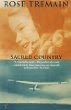
4. Sacred Country by Rose Tremain

Deep in the English countryside, a story of a village community that spreads far and wide by one of my all-time favourite writers. Masterful narration and unmistakeable characters. 


3. Flight Behaviour by Barbara Kingsolver.

Orange Prize-winning doorstop book with a surprise twist on every page. Humorous, irreverent, insightful, feminine, everything I love. As good as Barbara's superlative Poisonwood Bible. 


2. The Fault in Our Stars by John Green

I would never have believed that a book about teenage terminal illness would make me laugh and cry on the train...


1. Picture Me Gone by Meg Rosoff

Read my review here
A superlative book with expert narrative, characters and setting, I love it.


My full book reviews are available here


Saturday, 7 December 2013

Children's writers- advice from an editor

1/5 books make 4/5 of the profit for publishers.  The FInkler Question won the Man Booker in 2010 and had the biggest boost ever: 200,000 books; meanwhile Jordan's biography sold 300,000 in 6 weeks.  Big successes fund the many failures.  

Mills and Boon are the most successful publishers, they sell 130m books a year.  Their success is based on  a promise to readers. An attractive young woman will meet a dashing virile man.  Every genre promises its readers something, eg Beast Quest.

What a story needs:


  1. A good concept, well written.  The concept is more important than the writing.  If the concept can be summarised in five sentences it's high concept and that's your elevator pitch.
  2. Practice summarising your book in 5 sentences max.
  3. "But" is a useful word:  "Like Stephanie Meyer but with more heart."
  4. A strong main character, male for young boys, female for teen novels.  Strong means aspirational, honest, cool, slightly older than the intended readers.
  5. Younger boys prefer books about external conflict [eg dealing with monsters] which are usually written in the 3rd person
  6. Girls prefer internal conflicts, written in the first person.
  7. The inciting incident occurs in the first chapter.  Don't worry if it's confusing, readers can read on to find out what's happening.
  8. Write short chapters [eg 200 words] and finish each one with a cliffhanger.
  9. Word count: 5-7 4-8,000   8-10 8-10,000 10-13 10-50,000 13+ 30-80,000 words picture books, under 500 words.
  10. Always have more ideas in outline form.
With Thanks to Lil Chase.

Tuesday, 1 October 2013

"If you love someone you can read their mind"

"If you love someone you can read their mind" Author Meg Rosoff said in passing this evening at the #bathkidslitfest 

Leaving aside the considerable amount of selfish projection which goes on in loving, I imagine that this can sometimes be true, but how?  Is it because you build an inner image of them, a little homunculus, a 3D moving image that can speak for himself or herself, 


Here's the parts of the brain that move our muscles: the motor cortex.[Notice how your own body image is stretched out, throat at the bottom, bum and feet at the top].

Or is it because you observe the loved one so closely that you pick up transient micro-expressions that transmit distaste or anxiety as clearly as if they had spelt it out for you?

Both, I think.  When I love a woman she appears in my dreams, not only erotic dreams but ordinary night time dreams.  She just appears. I know she's been in the dream although I may not remember what she said or did. That proves to me that I've internalised their presence deep into my unconscious.  It's one of the signs that I am truly in love.  It gives her an eternal presence as my unconscious will continue to present her to me even when she's gone away.  She has acquired an eternal spiritual presence. It also enables me to talk to her when she isn't near me and I might sometimes get close to her real response to things I might say.

Sometimes when I'm getting to know a woman I find their face almost unrecognisable in certain lights.  This used to worry me, "Am I dementing?" I used to think.  I think it's because different sub-personalities, such as the mystic or the practical person are associated with widely different facial expressions, vocabulary and gestures.
Roberto Assagioli advanced the idea of subpersonalitites.  I'm not sure their location is as clear as in the image but they are separate from each other, sometimes even unaware of each other.

 It takes a while to internalise the constellation of features belonging to each fractional change in identity, taken together with position surroundings and intensity and direction of light.
So I think Meg is right but it's always going to be important to verify any intimations because it's so easy to misperceive and idolise or patronise.

Wednesday, 7 August 2013

Reflections on self publishing: costs, break even point, ISBN's

I spent an hour today talking to a director of a self publishing press.

Whether to buy an ISBN

An ISBN for a tree book is linked to a book distributor such as lightningsource. Waterstones are supplied by Gardners book wholesale distributors, few books are accepted direct from authors.

Break even point

The cost of setting up Print on demand varies but may be around £795 PLUS the cost of editing, about £325 for a 50,000 word book altogether about £1200.

The break even point would be around 1,000 books even if a publisher offers 70% of profits because: Printing costs about half the retail price of the book [ eg £3.50, I'm aiming for a retail price of £6.99] Amazon take a further 30%, that leaves about £1/book.  Bookshops take even more, leaving £0 or -£1 profit per book. 
Debut authors I've met have achieved about 300 book sales in the first year even with intensive marketing via bookshop launches, signings, school visits and literary festival events. 

Getting your book noticed

Publishers have access to Nielsen's Pub Web and can fill in the book's description fields: author, product, contents, reviews, as an author of an ebook with an ISBN you'd need to pay a fee of £150 to Nielsen to have the same facility.
A subtitle helps if it describes the drama of the central character: eg "Stolen: a letter to my captor" by  Lucy Christopher
Play the 'local author' card, media are often more interested in the person than the book and the quality of the writing.  
Wherever possible, include a back page giving your website, blog and the title of your next novel, inviting pre-orders.
With thanks to Miles Bailey of Choir Press

Tuesday, 23 July 2013

"Local author" Promote and Market yourself


   With Thanks to Colleen Laybourne-Smith
 Colleen biographyWho is published by Book Guild through their partnership scheme.  


Last year 3,000 people applied to become partners at the Book Guild and Colleen was one of 85 whose picture book for 5-8 year olds was accepted. In partnership, the author pays the cost of the first print run and receives 30% of the total price of each book sold

The initial Waterstones book launch.  Choose the most local branch .

  • Phone local papers and magazines in advance
  • Invite friends, relatives, contacts, fellow authors and inform the branch of pre-orders, bring your own copies to sell and use commercial book holders, pretty soft toys and a stand to make an eye-catching display.  
  • Use a banner with picture of the book: TITLE, GENRE, AUTHOR, BOOK SIGNING TODAY, PRICE, AGE RANGE  Have matching cards and book marks with links to a website.
  • Position your table near related books where you can talk to parents looking for a book: personalise your dedication for a christening or birthday.

Send out review copies, update your author page on Amazon, try to interest libraries, Google your ISBN, title and name: you may find people mention the book in remote places.

Subsequent Waterstones launches: "Local author" is a moveable feast: where you were born, where you went to primary school, secondary school, any previous towns you lived in, where your grandparents live or your present home. Let them know how many books were sold at the initial launch.

  • Set clear goals: number of books to sell or sales ranking at Amazon or Waterstones sales rankings also number of blog site hits.
  • Further events: Involve independent booksellers, mention them in press articles and ask if they will stock your book in return.  


Friday, 28 June 2013

Pitfalls and Lessons of Self Publishing 1/3

Self publishing: Avoid the pitfalls 1/3

Based on Kate Pool's Society of Authors meeting. If we can learn from the mistakes that others have made our lives will be made easier- no?

Publishing is having an identity crisis. Publishers don't know what's happening, agents don't know what's happening.  You may choose self publishing because it's the only way.  

Pitfall 1. ebooks don't translate easily into tree-books.  Publishing an ebook can be relatively easy but don't imagine you can translate your ebook seamlessly into a paperback.  Clashing formats demand numerous micro-editing changes.  The result is liable to look self-published unless the paper, the size and the font are correctly chosen.   Finish the text completely before considering e-publishing.

Pitfall 2.  Choosing a cover for a self published novel is tricky.  It's hard to know what would appeal to your target audience.  Remember artistic is not necessarily commercial.  Invite art college students to illustrate for a fee,  some authors call on family members.

Pitfall 3. Getting an ebook reviewed is tricky.  Sending out free ebooks runs the risk of being pirated or ignored.  Sending a large PDF is difficult and may also be pirated.  The best answer may be a small print run of tree books to send out free of charge.

Pitfall 4.  Asking Amazon to fulfil your orders may lead to the message "Temporarily Out of Stock' even though you have sent a consignment of books to their warehouse or arranged for print on demand. The explanation seems to lie with delays at the printers for example.  Some orders seem to get through.  Amazon has a sliding scale of charges based on the price you choose.  Amazon own ABE Books, The Book Depository and GoodReads.

Pitfall 5.  Beware the small print.  Never give away your rights to an intermediary.  Facilitators such as Lightningsource Antony Rowe and fast-print  prepare the book for publication and may offer various services in marketing and distribution or a client person who helps you through the publishing process.  All should offer a fee-based service.  These packages cost up to £5,000.

Similar services are on offer from authorhouse,

There's plenty of good advice on these websites.  Many authors are already promoting their books in multiple ways.  Make sure you get value for money.

More on marketing and self publishing next installment.


Tuesday, 16 April 2013

What I want to write about: lesson plan


Lesson Plan: one hour

What I want to write about. What I don’t want to write about 

Groups, timing
content
A/V aids
      Introduction:
Plenary
5 minutes
In this hour we will aim to
1.    Extend your repertoire of themes
2.    Do creative writing

Aims projected overhead
     Purpose of session
5 minutes
Importance of surprise and originality in writing.  With lots of ideas you have more choice.
     Make a list
5 minutes
Divide a fresh sheet of paper into two columns and list:
What I want to write about
Example sheet [below]
     Make another list
5 minutes
Now list: What I don’t want to write about
     Reflect
1 minute
Mark the ideas that stand out
      Discussion 1
In pairs, 5 minutes
Talk about the ideas that appeal
     Creative Writing
10 minutes
Choose an idea and do some free writing
      Creative Writing
10 minutes
 Which column did you choose? Choose an idea from the other column and do some free writing

      Discussion 2
In pairs, 5 minutes
 What was that like? 
Were ideas from one column easier to write?
Did the discussion with a partner help?
     Reading your work aloud


Share your writing with the group
      Summary
1 minute
Value of having a storehouse of ideas. The best ideas are sometimes counterintuitive.
Have you generated more ideas you can work on? 
Any comments.


Handout [below]

   What I want to   
   write about
 

What I don’t want 
to write about
 
 A
What I want to write about. What I don’t want to write about


We made two lists and selected one idea from each column.
1.             Having a good repertoire of ideas in your store cupboard provides impetus to your writing
2.            It gives you more choice.
3.            You may be rejecting ideas out of hand which could be really exciting and unexpected.
4.            Choose the idea that sings or which generates strong feelings in you.
5.            Getting into the habit of making judgments about which idea to go forward with involves a dialogue between the Inner Critic and the Creative being.
6.            Surprise and originality are vital to good writing.
7.            Be prepared to take on something you’ve never done before.
8.            “Things I hate” can generate a rap, a polemic or laughter through ridicule.
9.            Allowing in more ideas will enable you to allow real life experiences into your writing.
10.          You’ll collect expressions or phrases that surprise you and resonate and put them into dialogue or events.