Showing posts with label book review. Show all posts

Wednesday, 10 August 2016

1984 the stage play: Angst und Zeitgeist

1984 presents a vivid, scary, dystopian view of the present. 

The Party sees, hears and knows everything people do through a system of screens, cameras and paid informers. People willingly submit to this invasion of privacy because of Project Fear: 

the country is at war
 terrorism threatens 
the collapse of civilisation is imminent


  'There is no alternative'  

Michael Billington's review 
The illusion is maintained through constant repetition and sinks into the world view of everyone. Though I found the play melodramatic and the scenes of torture unbearable, it did make me think about the narrative that national governments like to foster.

There is the narrative of Great Britain: the 'golden years' of a benevolent empire founded on profits from slavery and naval aggression. A transient lead in technology has endowed Brits with the illusion of supremacy, hints of which were heard in the run-up to the Brexit vote. 

It's convenient to forget that Britain is sinking into a morass of corruption and inequality; taking its place as a small nation on the edge of Europe.
In a way, our present state resembles the book group who debate Winston Smith's diary: the myths and illusions of our present day Zeitgeist are invisible to us because we all want to believe a cosy narrative.

The British Empire gave a lift-up to nations that hadn't experienced bureaucracy or prejudice on the grounds of sexual orientation. Missionaries civilised primitive peoples and their illegitimate children, rebellions, torture and starvation are not a part of this story.

Friday, 29 January 2016

pop-up animation studio

I'm fascinated by film-making and I'd like to share my interest.

   It's a lie that playing video games is active; it's simply passive consumption of someone else's imagined world. 

All modern forms of entertainment: video games, cinema, TV and internet are essentially passive. 

As a result we spend hours every day staring at screens and tapping out keys. I'm no exception. It's unhealthy and to cap it all we're bombarded with commercials to use more and more of our time in a passive way. No wonder there's so much obesity. 


And yet Britain leads the way in innovating ever more ingenious games and series.

   Why let someone else have all the creative fun of making something new and original?

People need to discover how easy it is to create original images and to animate them into a film and tell a story visually. [in my humble opinion] Paintings can move.


There is nothing so creative as making your own images and seeing them move
It's possible to make a film in a day. It may not win an Oscar but it shows you how quickly modern software can composit a film out of a hundred stop motion photos. 

And with attention to a storyboard, characters and lighting it can be a film worth watching.

  So I've come up with the idea of a pop-up animation studio: a tripod, camera and laptop and craft materials, such as card and paper. It's small enough to fbe easily transportable by car or train so I can facilitate workshops around the country.

  It's useful to have several copies of animation characters so I now use a template for a male and female character printed out on card in advance. They fit together with brads, little black fasteners. If I use black card the brads will be almost invisible. They're black so you can alter them and colour them in on the day. 

So there it is and my next workshop on February 6th in Birmingham will show how robust the idea is.


Thursday, 22 October 2015

Truly creative writing, attribution and mindfulness

There are many books for writers that are designed to inspire you to write and to write well. 

For me, the best books are the ones that you have to put down because you feel: "I have to write now; it can't wait"

Writers often offer insights into their inspirations at literary festivals but the best advice I ever received was from Julia Green , children's writer and tutor at Bath Spa University. 

It has stayed with me and I often return to those five words:

"Get close to your character"

Whenever my writing diverts off into my own thoughts and favourite places or when I feel it's not resonating it's because I've lost that inkling of my character's feelings and thoughts. 

This is particularly likely to happen when I write in the third person. "She" feels a long way away and I need to remind myself that a novel perpetuates an untruth that we all act for a reason.

In real life I believe our actions and mediated by all kinds of random events to do with brain and body chemistry, day of the week and unplanned accidents.  Perhaps that's what a post-modern novel is designed to convey but it makes for heavy reading.

We live at the the Age of the 'Crisis of Attribution'; for most of us, natural disasters are not 'Acts of God' as they were in medieval times but random events which challenge a belief in a plan or an organising consciousness. 
In my best moments I believe in a spiritual realm but mostly I bumble along like everyone else, beset by regrets and ruminations.
In novels, A follows B which causes C in a believable and inevitable consequence of a character's actions. 
The challenge for the writer is to simulate free choice; to persuade readers that decisions and actions have consequences. It is conventional for puzzles to be solved, for evil doers to suffer consequences except in the case of lovable rogues and antiheroes. 
There's a great hunger for uplifting stories to be true and it's so strong that Governments employ storytellers to explain away setbacks and ugly inconveniences.
So my conclusion is to 'be in the zone' I need to become mindful and to imagine each of my characters is meeting the consequences of his or her actions.

Wednesday, 15 July 2015

Happy Endings in Children's Books

Happy Endings used to be vital in children's books. 

Not so with the recent trend for 'terminal teens' as seen in titles such as Jenny Downham's Before I die, John Green's The Fault in Our Stars and most recently in Sarah Benwell's The Last Leaves Falling. 


Perhaps these books reflect a post-modern rejection of moral tales and a willingness to tackle subjects specifically excluded in earlier guides for writers. They certainly tap into strong emotional events and enquiries about what lies beyond. Mainly, I think, the writers encourage us to live honest lives knowing that injury or disease can strike people of all ages without warning.

As a doctor, I'm glad that chronic disease in childhood, learning needs [Sarah Hammond's The Night Sky in my Head] are represented implying a more inclusive society. Since it's my blog, I can mention my own title: Speak to Me: Mute, witty and dangerous, which seeks to explore the teenage experience of advanced cerebral palsy.

All these titles challenge the overriding perception of a fit society in which 'fitness' is equated to both 'sexually attractive' and 'deserving'. The experience of people outside the presumed majority urgently needs to be explored in an age of hate crime of outsiders: those with disability, different gender, orientation or race. 

Despite advances in treatment, living with chronic illness is an experience of a minority of young people, their friends and their families. Arthritis, Down's Syndrome, autism, hemiplegia, cystic fibrosis, diabetes, heart disease all deserve to be represented here. 

What young people seek is not pity or charity but a recognition that their lives are as eventful and precious as any of the celebrities of whom we hear so much.

Monday, 6 July 2015

The Art of Being Normal by Lisa Williamson

I love the title which alludes to Jeanette Winterson's book: ".. when you could be normal" It's well researched with a heart-warming final scene, Trans deserves to be written about. Lisa portrays some of the anger, confusion and bullying in and around people who question their gender. So why do I feel let down? Alternating first person narrators are great for a YA romance [see Ann Turnbull's No Shame no Fear]but when both voices [spoiler alert] are transgender it can create confusion especially if one voice, Kate's, is less convincing. Secondly, the plot shifted between locating absent Dad and coming out. Some scenes were written to 'create a realist feel' rather than advancing the plot. There's a big difference between M2F and F2M transition; Kate and Leo's experiences differ enormously. This difference is borne out in a recent autobiography of transition: Professor Maxim Februari's The Making of a Man: Notes on Transsexuality. Maxim explains the effects he has noted while taking testosterone which has a gradual effect on emotions and strength.

Kate keeps a log of her male puberty changes and as she says: 'time is running out' while Leo can effectively pass as male. Overall I thoroughly recommend the book, Lisa Williamson is a talent to look out for and I hope to see more inclusive stories like this.

Saturday, 1 February 2014

You can print paperbacks for free

You can print paperbacks for free

there must be a drawback, or is there?

Amazon's Create Space site enables you to transfer an e-book into a tree book free of charge. You don't have to be a computer wizard. The only costs are for an ISBN which is not essential and a book cover which you can make yourself. 

ISBN

I chose to buy an ISBN from Nielsen because I wanted to link my e-book to the paperback on Amazon. I also intend to publish several novels as e-books and in paperback, so I bought ten ISBN's. As you can see on the Nielsen site, the cost is £13.20 for each ISBN. 
I wanted my book to appear on Nielsen's Pub Web site so it can be found by book buyers and librarians anywhere in the world.

Book cover

If you have experience of using Photoshop you easily mock up a paperback cover. Create Space offer some tools to make the task easier, including advice on font size, spine width and content of blurb at the back. 

Research

I visited libraries and bookshops and studied the covers of books that had similar themes to mine. I tried to read the meaning of each cover. I opted for a face-on half portrait because it said: 'personal story of a young girl' [Lauren] and left space for the title.

I prefer drawings to photographs; they seem more personal.
I chose to distort my title using perspective like a yellow painted sign on the road; Lauren's van parks in a disabled bay outside school. I didn't want a wheelchair on the  cover because I thought it would put readers off. Lauren is a feisty young woman who happens to be on wheels. 
I made a collage and photographed it. The cut out letters against the tarmac give a striking adolescent feel to the cover.

The result was quite raw so I smartened it up and added a subtitle and author name using Create Space's editor. It took a number of tries to get the picture right but it wasn't technically difficult. Here's the finished result as it appears on Amazon:

I chose quotes from the text for the back cover and used the same design in the background. You can see how basic my drawing was using only 'Paint'. I wanted the drawing to look like as if it had been done by a teenager.

The heart is important. My book is a romance and I noticed that romances invariably have pink hearts on them. I chose to give my heart a rough, distressed look, the road to love isn't smooth.
You can read an extract from my book here.
In later blogs I'll tell you my experience of pricing, promotion and marketing.

Sunday, 19 January 2014

Fairy Tales II: Fantastic fantasy via Tolkien

Fantasy, Tolkien says, is more suited to narrative than drama. Fairy tales are most often represented on stage as the peculiarly English Christmas pantomime.

Fantasy 'does not destroy or insult Reason, in fact, the best fantasy has clear reasons behind it. 

Fairy tales deal with simple, fundamental things, like keeping promises and judging by appearances. No princess is going to literally marry a frog; fairy tale transformations beautifully illustrate how transient human perspectives of people are: changing instantly between good to evil, ugly to beautiful, rags to riches [and back again].

Fairy Tales 'go back to nature' chiming with our evolutionary origins as animals. Humans are different from animals; our link with other creatures has been severed but we must be aware that it once existed.
'Trees are more beautiful than mass-produced street lamps' to paraphrase Tolkien.
Escape and consolation are important functions of fantasy. They sidestep the ordinary in order to inspire us. Fairy Tales must have a happy ending, according to Tolkien 
[though some mermaid tales and Grimm's 'Three Wishes' about petty marital arguments don't]. Reincarnation and survival are recurrent themes. The ending gives a beat and lifting of the heart.
Is it true? is often asked: if the secondary world of the fairy tale is well constructed the answer is 'yes, in that world, it is.'

Wednesday, 1 January 2014

Top Ten Best Reads of 2013

My Top Ten reads of 2013

10. The Curtain Maker of Beirut by Teresa Thornhill

A unique mix of eyewitness account and travel journal, a moving portrait of a country at a postwar crossroads when it was possible to hear the voices of Sunni, Shi'a, Maronite Christian, Druze and Palestinian veterans and civilians. Well-written dialogue and background with extra relevance in the present conflict in Syria.


9.  The Reason I jump by Naoki Higashida

The title promises more than it delivers but a fascinating insight for parents and friends into what it feels like to be autistic with advice about how to behave around an autistic person. An easy read with a question and answer format. Raises many questions with incomplete answers. 'Why?' is the hardest question of all to answer, 

8. Shine by Candy Gourlay

A cross-cultural allegory about growing up with a secret and despised blemish. How 'civilised' society alienates anyone different and how inclusive traditional spirituality can be. Mutual support from a fellow sufferer. Well written and original from a promising young writer, one to watch.


7. The Chosen One by Carol Lynch Williams

What it's like to grow up as a teenager, brain-washed in a remote and isolated cult. Tense and pacey. The redeeming impact of books from the outside.Available here

6. More Than This by Patrick Ness

Slow-burning page turner exploring the currently popular theme of  reincarnation in a YA novel. A hopeful book by a great story teller with striking characters. Worth persevering with. 


5. Microcosm: E coli and the new science of life by Carl Zimmer

This amazing book takes you to the frontiers of science about a bacterium which we know more about than any other organism. As well as causing life-threatening multi-organ damage, E coli saves lives by making insulin and growth hormone for us. 

So much I didn't know, it's embarrassing.


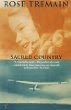
4. Sacred Country by Rose Tremain

Deep in the English countryside, a story of a village community that spreads far and wide by one of my all-time favourite writers. Masterful narration and unmistakeable characters. 


3. Flight Behaviour by Barbara Kingsolver.

Orange Prize-winning doorstop book with a surprise twist on every page. Humorous, irreverent, insightful, feminine, everything I love. As good as Barbara's superlative Poisonwood Bible. 


2. The Fault in Our Stars by John Green

I would never have believed that a book about teenage terminal illness would make me laugh and cry on the train...


1. Picture Me Gone by Meg Rosoff

Read my review here
A superlative book with expert narrative, characters and setting, I love it.


My full book reviews are available here


Friday, 20 December 2013

S a new book looking like a library book

Books that weren't meant to be read.

A new book that appears to be a library book with annotations on it.


It's a piece of dissembling but could it be a trend?

S  reviewed by Mark Lawson in the Guardian here

Maybe this is a reaction to the ebook revolution, which has done away with the hard copy of a book and created a double for practically any book you can buy and hold.People have said that the packaging of books will become more startling as a response to all this cyber-reality.

Mark Lawson refers to AS Bayatt's Possession, for which the author made up poetry that purports to have been written by a poet who is being researched by one of the characters.  
What other documents could be released which are ambiguous about their origins?

  • A book marked TOP SECRET that appears to have been smuggled out of GCHQ.  Perhaps we have that already.
  • A coach's notes on every member of a cricket team with strategies about how to exploit the weaknesses of each player [of interest to enthusiasts, probably sadistic]
  • A book of texts, [yes, it's been done]
Laurence Stern's Tristram Shandy is perhaps the best example of this genre, a rambling comic novel which reveals much while interrupting itself repeatedly and dispensing almost entirely with plot.
     Feigned invitations and letters are an regular part of the realist novel and are used in  Gothic novels to set the scene before wandering off into more fantastical realms.  Mary Shelley employs this technique,  switching between narrators: the creature, Dr Frankenstein and a sea captain.
   There is a whole genre of epistolic novels which include non fiction titles such as Priscilla Wakefield's An Introduction to Botany from the 1830's in which Felicia guides her sister through the orders of plants in a series of letters.  A modern equivalent is Lionel Shriver's We need to talk about Kevin which is constructed entirely of fictitious letters.
    It all goes to show that dissimulation is at the centre of the writer's art.


Saturday, 7 December 2013

Children's writers- advice from an editor

1/5 books make 4/5 of the profit for publishers.  The FInkler Question won the Man Booker in 2010 and had the biggest boost ever: 200,000 books; meanwhile Jordan's biography sold 300,000 in 6 weeks.  Big successes fund the many failures.  

Mills and Boon are the most successful publishers, they sell 130m books a year.  Their success is based on  a promise to readers. An attractive young woman will meet a dashing virile man.  Every genre promises its readers something, eg Beast Quest.

What a story needs:


  1. A good concept, well written.  The concept is more important than the writing.  If the concept can be summarised in five sentences it's high concept and that's your elevator pitch.
  2. Practice summarising your book in 5 sentences max.
  3. "But" is a useful word:  "Like Stephanie Meyer but with more heart."
  4. A strong main character, male for young boys, female for teen novels.  Strong means aspirational, honest, cool, slightly older than the intended readers.
  5. Younger boys prefer books about external conflict [eg dealing with monsters] which are usually written in the 3rd person
  6. Girls prefer internal conflicts, written in the first person.
  7. The inciting incident occurs in the first chapter.  Don't worry if it's confusing, readers can read on to find out what's happening.
  8. Write short chapters [eg 200 words] and finish each one with a cliffhanger.
  9. Word count: 5-7 4-8,000   8-10 8-10,000 10-13 10-50,000 13+ 30-80,000 words picture books, under 500 words.
  10. Always have more ideas in outline form.
With Thanks to Lil Chase.

Monday, 28 October 2013

Why I wrote Speak to Me: mute witty and dangerous

In Speak to Me: mute witty and dangerous Lauren aged 14 starts school, only, she can't speak, she needs help to point at letters on a board.  

Lauren's nerves are on edge after overhearing comments as she comes in to the classroom. She wants to learn enough to get to university and also she's like to get to know the boys. Classmate Anthony learns how to help Lauren speak and after a series of misunderstandings Anthony gets called into the head's office with a serious charge that could affect his schooling forever.


I wrote Speak to Me while studying for an MA at Bath Spa University. I found few novels for teenagers explored the drama of life in a wheelchair.  It's a page-turning story that makes you think.  It is possible to be inside the head of someone who can't speak without help and there's plenty of drama on all sides.
Speak to me is available as an ebook on KIndle here:  Speak to Me and it will soon be released in paperback.

Friday, 11 October 2013

Kate Mosse: Five facts about the French in Languedoc

Kate Mosse: La France profonde

1. Richard Coeur de Lion couldn't speak English and he barely set foot in England, that's the revelation that Kate Mosse brought to the Cheltenham Book Festival today.  Richard was bilingual: in Langue d'Oil and Occitan.  The language of Occitan is promoted much more in schools than it used to be.

2. The French buy French wine, cheese and bread. Kate attributes this to the years of shortage in Vichy France, when people in towns relied on local farmers to stave off hunger.  In the older generation, she said, the gratitude lives on. The French prefer to do things in a French way which may not be the most efficient way. 

3. The majority of Jews in France were rescued in the South of France.  Kate has always been fascinated by the strong links between the land, its history and the people, which is portrayed in the Labyrinth trilogy.    Le chemin de la liberte provided an escape route over the Ariege Pyrenees.  The people of Launguedoc have a long history of subjection to  authority and a refusal to comply.  

4. Pretty villages in France  have hardly changed.  France is highly centralised but because of its sheer size it has a long history of independent local government.  Kate feels  French villages and towns have resisted economic change and redevelopment more effectively than the Brits. . However, some villages in the south of France have a larger population of ex-pat Brits than French people. 

5. Winters are cold in Provence.  Brits tend to forget about the Tramontane, the strong northerly  wind that chills to the bone in winter. It's not all hot sun, it's hotter in summer and cooler in winter than Britain.

Tuesday, 1 October 2013

"If you love someone you can read their mind"

"If you love someone you can read their mind" Author Meg Rosoff said in passing this evening at the #bathkidslitfest 

Leaving aside the considerable amount of selfish projection which goes on in loving, I imagine that this can sometimes be true, but how?  Is it because you build an inner image of them, a little homunculus, a 3D moving image that can speak for himself or herself, 


Here's the parts of the brain that move our muscles: the motor cortex.[Notice how your own body image is stretched out, throat at the bottom, bum and feet at the top].

Or is it because you observe the loved one so closely that you pick up transient micro-expressions that transmit distaste or anxiety as clearly as if they had spelt it out for you?

Both, I think.  When I love a woman she appears in my dreams, not only erotic dreams but ordinary night time dreams.  She just appears. I know she's been in the dream although I may not remember what she said or did. That proves to me that I've internalised their presence deep into my unconscious.  It's one of the signs that I am truly in love.  It gives her an eternal presence as my unconscious will continue to present her to me even when she's gone away.  She has acquired an eternal spiritual presence. It also enables me to talk to her when she isn't near me and I might sometimes get close to her real response to things I might say.

Sometimes when I'm getting to know a woman I find their face almost unrecognisable in certain lights.  This used to worry me, "Am I dementing?" I used to think.  I think it's because different sub-personalities, such as the mystic or the practical person are associated with widely different facial expressions, vocabulary and gestures.
Roberto Assagioli advanced the idea of subpersonalitites.  I'm not sure their location is as clear as in the image but they are separate from each other, sometimes even unaware of each other.

 It takes a while to internalise the constellation of features belonging to each fractional change in identity, taken together with position surroundings and intensity and direction of light.
So I think Meg is right but it's always going to be important to verify any intimations because it's so easy to misperceive and idolise or patronise.

Thursday, 12 September 2013

Iraqi Kurdistan 20 years ago

Teresa Thornhill's book Sweet Tea with Cardamon recalls the brief  flowering of Kurdish democracy towards the end of Saddam Hussein's rule.  Through visits in May and September 1993, Teresa meets the survivors from thirty years of military strife.  The heart of the book is in the conversations that Teresa has recorded with the precision unique to a lawyer and advocate of women's rights.  The reported dialogue is both convincingly transcribed and conveys the powerful empathy that the author feels toward the people, especially the women she meets.
   
There is respite from accounts of arrest and torture with evocative descriptions of the landscape entering Iraqi Kurdistan at Cizre [above], visiting Ashawa and especially a pomegranate orchard in Shaqlawa [below].

 The author meets spirited survivors and women activists and explores the battle for equal rights.  Contradictions of dress code and legal systems emerge among the Kurds: the largest people without a state in the world' according to the back cover. 

  Sweet Tea  is a scholarly and moving portrait of the Kurdish Iraq, a valuable resource for historians and a telling testimony to the instinct for survival of the Kurdish people.
  The book is available here

Saturday, 31 August 2013

Rules about Gothic novels

Setting aside the fact that there are no rules, here are some more rules for novelists.  In a chapter in The Realist Novel, Richard Allen  explores the concept of the Gothic novel using Mary Shelley's Frankenstein as an example.  Notice the way one story nestles within another, in this case Captain Walton's letters to his sister are interrupted by the first person account of a stranger he rescues from the sea ice, Dr Frankenstein.  In chapter 11, the creature takes over as narrator.

   Although genres overlap, the Gothic novel has some quite distinct qualities which differentiate it from contemporary realist novels. Eve Kosovsky Sedgewick brought these criteria together in her book The Coherence of Gothic Conventions [1986].  These criteria go back a long way and can be seen in the novels of Ann Radcliffe from the 1790's:

  1. The setting will include an 'oppressive ruin' in a wild landscape in a European country which is 'a Catholic or feudal society'.
  2. One central character will be a heroine with 'trembling sensitivity' and her impetuous lover.
  3. There will be a tyrannical older man who will have 'a piercing gaze' who will try to rape, imprison or murder the lovers.
  4. The narrative will be interrupted by contrasting voices and letters allowing changes in point of view.
  5. Common sub-themes include taking religious vows and monastic orders, altered consciousness similar to sleep or death, underground scenes, live burial and discovery of remote family ties.
  6. Incest is hinted at, unnatural echoes or silences occur and the poisonous effects of guilt and shame recur.
  7. Unintelligible writing is discovered, often described as unspeakable.
If you see a relation to Charles Dickens, Bram Stoker, Richard O'Brien and JK Rowling, it is clear how deeply the Gothic novel seeks to explore archetypes that scare us in all their forms, especially the territory which is just beyond the known daytime world.
    Notice how Dr Frankenstein's account begins in a realist frame [cf the Dursley's suburban residence of Harry Potter] and shifts into the irrational: fearful obsessions, unspeakable obsessions and isolation.  Frankenstein seems driven by his unconscious in a half waking state.  This adds to the impact of the novel by suggesting an 'unreliable narrator'. We recognise that we are entering the subjective adrenaline-fuelled experience of the character so that we can more easily overlook the fantastical elements.
   In relation to incest, Frankenstein has a strong bond with his cousin Elizabeth ['you are my children,' his mother tells them].  Jealousy plays a part in the  way the creature disrupts Frankenstein's marriage to Elizabeth.

Wednesday, 7 August 2013

Reflections on self publishing: costs, break even point, ISBN's

I spent an hour today talking to a director of a self publishing press.

Whether to buy an ISBN

An ISBN for a tree book is linked to a book distributor such as lightningsource. Waterstones are supplied by Gardners book wholesale distributors, few books are accepted direct from authors.

Break even point

The cost of setting up Print on demand varies but may be around £795 PLUS the cost of editing, about £325 for a 50,000 word book altogether about £1200.

The break even point would be around 1,000 books even if a publisher offers 70% of profits because: Printing costs about half the retail price of the book [ eg £3.50, I'm aiming for a retail price of £6.99] Amazon take a further 30%, that leaves about £1/book.  Bookshops take even more, leaving £0 or -£1 profit per book. 
Debut authors I've met have achieved about 300 book sales in the first year even with intensive marketing via bookshop launches, signings, school visits and literary festival events. 

Getting your book noticed

Publishers have access to Nielsen's Pub Web and can fill in the book's description fields: author, product, contents, reviews, as an author of an ebook with an ISBN you'd need to pay a fee of £150 to Nielsen to have the same facility.
A subtitle helps if it describes the drama of the central character: eg "Stolen: a letter to my captor" by  Lucy Christopher
Play the 'local author' card, media are often more interested in the person than the book and the quality of the writing.  
Wherever possible, include a back page giving your website, blog and the title of your next novel, inviting pre-orders.
With thanks to Miles Bailey of Choir Press

Tuesday, 23 July 2013

"Local author" Promote and Market yourself


   With Thanks to Colleen Laybourne-Smith
 Colleen biographyWho is published by Book Guild through their partnership scheme.  


Last year 3,000 people applied to become partners at the Book Guild and Colleen was one of 85 whose picture book for 5-8 year olds was accepted. In partnership, the author pays the cost of the first print run and receives 30% of the total price of each book sold

The initial Waterstones book launch.  Choose the most local branch .

  • Phone local papers and magazines in advance
  • Invite friends, relatives, contacts, fellow authors and inform the branch of pre-orders, bring your own copies to sell and use commercial book holders, pretty soft toys and a stand to make an eye-catching display.  
  • Use a banner with picture of the book: TITLE, GENRE, AUTHOR, BOOK SIGNING TODAY, PRICE, AGE RANGE  Have matching cards and book marks with links to a website.
  • Position your table near related books where you can talk to parents looking for a book: personalise your dedication for a christening or birthday.

Send out review copies, update your author page on Amazon, try to interest libraries, Google your ISBN, title and name: you may find people mention the book in remote places.

Subsequent Waterstones launches: "Local author" is a moveable feast: where you were born, where you went to primary school, secondary school, any previous towns you lived in, where your grandparents live or your present home. Let them know how many books were sold at the initial launch.

  • Set clear goals: number of books to sell or sales ranking at Amazon or Waterstones sales rankings also number of blog site hits.
  • Further events: Involve independent booksellers, mention them in press articles and ask if they will stock your book in return.  


Friday, 28 June 2013

Pitfalls and Lessons of Self Publishing 1/3

Self publishing: Avoid the pitfalls 1/3

Based on Kate Pool's Society of Authors meeting. If we can learn from the mistakes that others have made our lives will be made easier- no?

Publishing is having an identity crisis. Publishers don't know what's happening, agents don't know what's happening.  You may choose self publishing because it's the only way.  

Pitfall 1. ebooks don't translate easily into tree-books.  Publishing an ebook can be relatively easy but don't imagine you can translate your ebook seamlessly into a paperback.  Clashing formats demand numerous micro-editing changes.  The result is liable to look self-published unless the paper, the size and the font are correctly chosen.   Finish the text completely before considering e-publishing.

Pitfall 2.  Choosing a cover for a self published novel is tricky.  It's hard to know what would appeal to your target audience.  Remember artistic is not necessarily commercial.  Invite art college students to illustrate for a fee,  some authors call on family members.

Pitfall 3. Getting an ebook reviewed is tricky.  Sending out free ebooks runs the risk of being pirated or ignored.  Sending a large PDF is difficult and may also be pirated.  The best answer may be a small print run of tree books to send out free of charge.

Pitfall 4.  Asking Amazon to fulfil your orders may lead to the message "Temporarily Out of Stock' even though you have sent a consignment of books to their warehouse or arranged for print on demand. The explanation seems to lie with delays at the printers for example.  Some orders seem to get through.  Amazon has a sliding scale of charges based on the price you choose.  Amazon own ABE Books, The Book Depository and GoodReads.

Pitfall 5.  Beware the small print.  Never give away your rights to an intermediary.  Facilitators such as Lightningsource Antony Rowe and fast-print  prepare the book for publication and may offer various services in marketing and distribution or a client person who helps you through the publishing process.  All should offer a fee-based service.  These packages cost up to £5,000.

Similar services are on offer from authorhouse,

There's plenty of good advice on these websites.  Many authors are already promoting their books in multiple ways.  Make sure you get value for money.

More on marketing and self publishing next installment.


Saturday, 1 June 2013

Wartime poetry

Effie Roberts' poems recount the impact of war on the everyday lives of women.  Effie loses her sweetheart in WWI, marries his best friend but her poems are silenced when she loses her husband to a heart attack two years after the end of the World War II.

     A generation of women lived through the 'war to end all wars' only to experience the threat of Nazi invasion and bombardment.  Effie's poems evoke the home front: rationing, austerity, shortages, queues and recycling in Cheltenham, Gloucestershire.  
     Effie's heartfelt poems include many striking images: a football dropped from a plane with a note reporting Armistice Day, the days of freedom on Sheffield trams in early 1939 and her crushing loss in 1947.  
     A picture emerges of a seamstress who sought the best for her family, loved sunny days and desperately missed the foods and holidays that she loved. 

A Wartime Poetry Journal.

Read Effie's poems here:

Effie's poems

Buy the book

Monday, 9 July 2012

Kafkaesque allegory


Robert Edric: Gathering the water
Gathering the Water explores a remote Northern valley in the weeks before it is flooded forever.  It reads like an allegory; a water board employee dips into the enclosed lives of the inhabitants, having neither the power to help them nor the ability to influence his shadowy employers.  His meticulous reports are ignored; he is told to abridge them and he duly fabricates them and immerses himself in the brooding landscape.  The image of a rising tide, an unstoppable flood, insinuates itself throughout the novel.  Some stories of the landscape which have been buried underground are revealed as the water level rises.  We sense Mr Weightman’s increasing sympathy with the villagers and the dialogue reveals the gulf that separates him from the inhabitants.  The novel works both as a portrait of Victorian northern life and as a model for the pointlessness of many modern day Kafkaesque jobs.  Corruption, madness, hypocrisy and ignorance emerge, leading to its tragic conclusion.   It’s a rare and special novel; it most resembles novel Waterland by Graham Swift, as a portrait of a landscape and its inbred people.  It’s a novel that can’t be easily summarised; images linger on after you’ve read it, longlisted for the Man Booker prize, thoroughly recommended.